

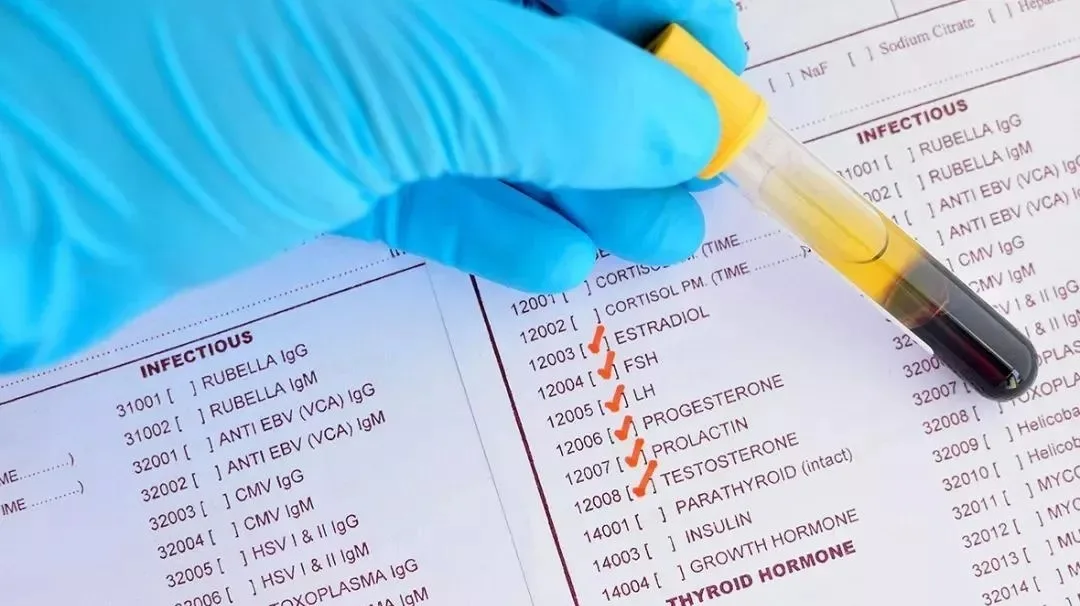
What should be checked before starting treatment, why these tests are necessary, and how long the test results are valid? Here's a list of items that can be brought to the hospital directly.
For women: 8 tests:Six hormone levels (on days 2–4 of menstruation), AMH (at any time), thyroid function tests (TSH, FT3, FT4), infectious disease screenings (HBV, HCV, syphilis, HIV), TORCH tests, uterine cavity examination (ultrasound or hysteroscopy), cervical cytology (TCT), blood tests for anemia and coagulation function.
For men: 4 tests:Semen analysis (after 2–7 days of abstinence), sperm morphology and DNA fragmentation rate (if necessary), infectious disease screenings, blood tests.
Why is the thyroid gland important? High TSH levels can affect ovulation and implantation. People trying to conceive are usually advised to keep TSH levels below 2.5 mIU/L. This test is often overlooked.
Validity period of test results:Infectious disease screenings are generally valid for 6 months, hormone and semen analyses for 3 months, while chromosome analysis results remain valid for a long time. When seeking medical care abroad, most institutions require reports from within the past 3–6 months, and the reports must be translated into English or the local language.
It's recommended to convert all test reports into PDF format, naming them in the format "Women/Men + Test Date". Bring the original reports when traveling. This way, you can avoid having to repeat the same tests during the consultation.
For more on fertility preparation, second/third-generation IVF, and overseas, U.S., Thailand, Malaysia, America or Cambodia IVF, scan the QR code on the right or call lelaiwa's hotline+852 6145 8043!
 Address: Beijing City Yili Ecological Plaza
 WeChat: lelaiwa2008
 Phone: +852 6145 8043
