

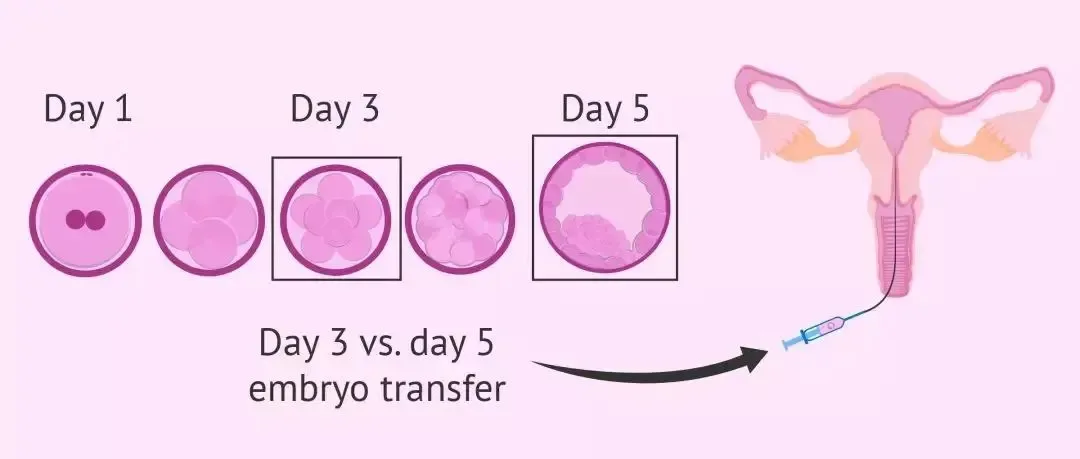
According to data from the National Healthcare Security Administration, after assisted reproduction services were included in the medical insurance coverage, the five most commonly used services are: embryo transfer, sperm selection and processing, embryo culture, egg retrieval, and intracytoplasmic sperm injection. These five services are essential components of almost every IVF cycle. This article explains why these services are so frequently used, and why they represent an effective way to reduce the burden on patients.
1. Why these five services, and not others?
The typical IVF cycle involves the following steps: ovulation induction → egg retrieval → sperm selection/processing → fertilization (intracytoplasmic sperm injection) → embryo culture → embryo transfer. You will see that these five services are precisely those that are essential during the entire cycle. They are necessary steps that cannot be skipped.
2. An overview of each service: What are their clinical needs?
- Egg retrieval: This is a crucial step in obtaining eggs; there is no substitute for it.
- Sperm selection and processing: This improves sperm quality and eliminates defective sperm, thereby increasing fertilization efficiency.
- Intracytoplasmic sperm injection: This is a key method for treating cases where the man has severe male infertility issues.
- Embryo culture: This is a necessary stage in the development of fertilized eggs into viable embryos.
- Embryo transfer: This is the final step in the process, where the embryo is transferred back into the uterus.
These five services determine whether there are any embryos available, and whether the embryo can successfully implant in the uterus.
3. Why does including these services in the medical insurance reduce the burden on patients?
Since these services are essential, including them in the insurance coverage directly reduces the financial burden on patients. The services that are most important and most costly are also covered by insurance. This reflects the principle of "ensuring basic needs while benefiting people's lives" – money is spent where it matters most.
4. What benefits do patients receive from this policy?
- clearer expectations: Patients know that certain services are likely to be covered, which makes it easier to plan their budgets.
- more stable decision-making: Patients can avoid the risk of treatment interruption due to cost concerns.
- greater fairness: Essential services are covered uniformly, reducing the choice between different options.
5. Still some management considerations
Frequent use does not mean full coverage. Some screening procedures (such as PGT) and non-essential medications may not be covered. The proportion of coverage and the minimum deductible vary from province to province. It is recommended to check the local list before seeking medical treatment.
Data source: Public data from the National Healthcare Security Administration in August 2026, reported by authoritative media outlets. Please refer to the latest local lists for details.
For more on fertility preparation, second/third-generation IVF, and overseas, U.S., Thailand, Malaysia, America or Cambodia IVF, scan the QR code on the right or call lelaiwa's hotline+852 6145 8043!
 Address: Beijing City Yili Ecological Plaza
 WeChat: lelaiwa2008
 Phone: +852 6145 8043
